Why Retro Typography is Dominating Packaging Right Now
It's not nostalgia for its own sake. The current wave of vintage and retro typography in packaging design is doing something more specific: it's making new products feel like they've been around long enough to be trusted. According to Resource Label Group, retro packaging signals authenticity and establishment even when the brand launched last Tuesday. That's a useful trick for a DTC hot sauce brand or a small-batch gin that needs to compete with labels that have decades of shelf presence behind them.
What's actually happening is what you might call neo-retro, taking the structural confidence of mid-century typography, the warmth of 60s and 70s lettering, the handcrafted texture of letterpress and sign painting, and running it through a modern layout sensibility. Ultra Labels in Australia flagged retro-inspired fonts as the top label and packaging design trend heading into 2026. Letterhend pointed to sweeping swashes and textured retro tones as defining branding and packaging work this year. And you can see it everywhere on the shelf: craft beer, natural wine, artisan pantry goods, independent spirits, botanical skincare. The aesthetic is doing real commercial work.
Below are eight fonts worth keeping in your toolkit, each matched to the packaging categories where they'll earn their place.
Flatface Henry's by Flatface Atelier – Craft Food, Deli Goods, Farmers Market Branding

If you've ever looked at a 1970s grocery store sign and thought "that energy, but on a label," Flatface Henry's is the font you've been circling around. It's a brush stroke sans built on the visual language of deli and grocery store signage from the 60s and 70s, thick, casual, slightly imperfect, completely readable at a glance. The single-stroke construction gives it a spontaneous quality that reads as handmade without being precious about it.
This one belongs on artisan food packaging: small-batch pasta sauces, pickled goods, deli meats, farmers market honey. It also works hard for coffee brands going for that neighbourhood roaster character. The warmth in the letterforms means it pairs naturally with kraft paper, cream stock, and earthy colour palettes. It's the font you reach for when the brief says "approachable" but you know "boring" is the actual danger.
Sign Painter Sans by Ulysses Design Co – Craft Beer, Independent Spirits, Hot Sauce

Sign Painter Sans comes from a very specific tradition: American hand-lettered signage, the kind of typography that got painted onto shop windows and tavern boards before digital anything existed. Ulysses Design Co built this around the authentic feel of vintage letterpress, with those small irregularities that modern tools try so hard to fake. It comes in two styles and three weights, which gives you real flexibility across a label system.
The sweet spot for this one is craft beer and independent spirits. It carries the weight of that mid-century tavern aesthetic without feeling like a costume. Works especially well for IPAs and ales that want to signal local and handcrafted, and equally strong for hot sauce brands doing the "founded in a garage, ended up at Whole Foods" story. The contrast between its high-impact display presence and those subtle hand-drawn details is exactly what keeps a label interesting at arm's length and on close inspection.
SP Blunt by Sup-Port Studio – Merch Labels, Canned Goods, Brewed Beverages

The bundled approach here is what sets SP Blunt apart from most vintage fonts. You get the typeface itself, mid-century in character with that slightly blunt, confident stroke weight, plus 62 logo templates and 110 ribbons and badges. For a designer working across multiple packaging SKUs or building out a brand system from scratch, that's significant. You're not just buying a font; you're buying a head start on an entire visual language.
SP Blunt sits naturally in the craft beer space (the badge templates alone are worth it for a six-pack rebrand), but it also reads well on canned goods, bottled beverages, and any packaging where you need that established, trusted feel quickly. The mid-century to early 70s character means it pairs well with illustrated label elements, which aligns with what VistaPrint flagged as a major 2026 direction: artist-driven, illustrated label design with historical type references.
Sogta by Marvadesign – Natural Wine, Botanical Skincare, Candles

Bold script with actual personality. Sogta brings a 70s display script energy that's thick and flowing without losing the sharpness that keeps it from going soft. The geometric cuts through the curves are the detail that lifts it: you get warmth and movement, but with enough structural tension to feel intentional rather than decorative.
Natural wine is an obvious match, especially the kind of label that's doing painterly illustration or abstract art direction behind the type. But Sogta also works well for botanical skincare brands that want a retro character without leaning too clinical or too precious. Candle brands in the lifestyle space will find it useful too, particularly for collections built around a 70s interior aesthetic. Run it large as a primary wordmark on a simple label and it carries the whole design.
The Postgates by Sarid Ezra – Luxury Skincare, Natural Wine, Independent Perfume

Not every retro packaging brief calls for warmth and grain. Some call for the kind of refined elegance that references an older tradition of craftsmanship without replicating a specific era's look. The Postgates operates in that space. It's a classic script with extensive stylistic alternates and swashes, the sort of typographic toolkit that lets you build something that feels genuinely bespoke rather than template-driven.
This is the font for packaging that needs to justify a premium price point through its visual presence alone. Luxury skincare, high-end natural wine with a serious cellar door aesthetic, independent perfume or fragrance brands. The alternates and swashes mean you can dial the formality up or back depending on the product, and the ligature options give you control over custom wordmark work. Letterhend's observation about sweeping swashes as a defining branding direction in 2026 is basically a description of what this font does by design.
BaseHead by Typeparties – Hot Sauce, Streetwear Swing Tags, Independent Coffee

Raw, chunky, and built to dominate. BaseHead pulls from 70s poster culture and underground print, the kind of letterforms that got used on political posters and music flyers before they got cleaned up into something respectable. The slightly irregular contours and organic weight variations are what give it that authentic handcrafted character that nobody prints on demand can replicate convincingly.
Hot sauce and condiment brands are the obvious call here: the visual language of bold heat, maximum shelf presence, products that announce themselves. But BaseHead also works for independent coffee roasters going for an anti-corporate street identity, and for streetwear brands that need swing tags and inner label typography with genuine edge. It's the font you reach for when "bold" isn't enough and you need something that feels like it was printed in a basement for a reason.
If you're working in this space, there's more retro display typography worth digging through depending on how deep into this territory your project goes.
SFC Steal Deal by Skilline Fonts Co – Vintage Deadstock Tags, Discount Brands, Nostalgic FMCG

There's a specific kind of recognition that comes from typefaces that feel lifted directly from real-world commercial signage. SFC Steal Deal is exactly that: lettering drawn from the visual tradition of discount marketplace signage, the kind of type that's so embedded in everyday commercial environments that it reads as instantly familiar without anyone being able to name why.
That familiarity is the point. For brands doing deadstock or vintage clothing hangtags, this is the aesthetic. For packaging that wants to reference a particular strain of working-class commercial nostalgia, it lands. It also has real potential for FMCG brands leaning into retro-value positioning, the sort of product that's deliberately channelling a budget-era aesthetic as a form of personality. Used straight it's nostalgic; used with awareness it's a solid design choice with genuine cultural legibility.
403 Pambo by 403TF – Vinyl Reissues, Record Store Merch, Groovy Food Packaging

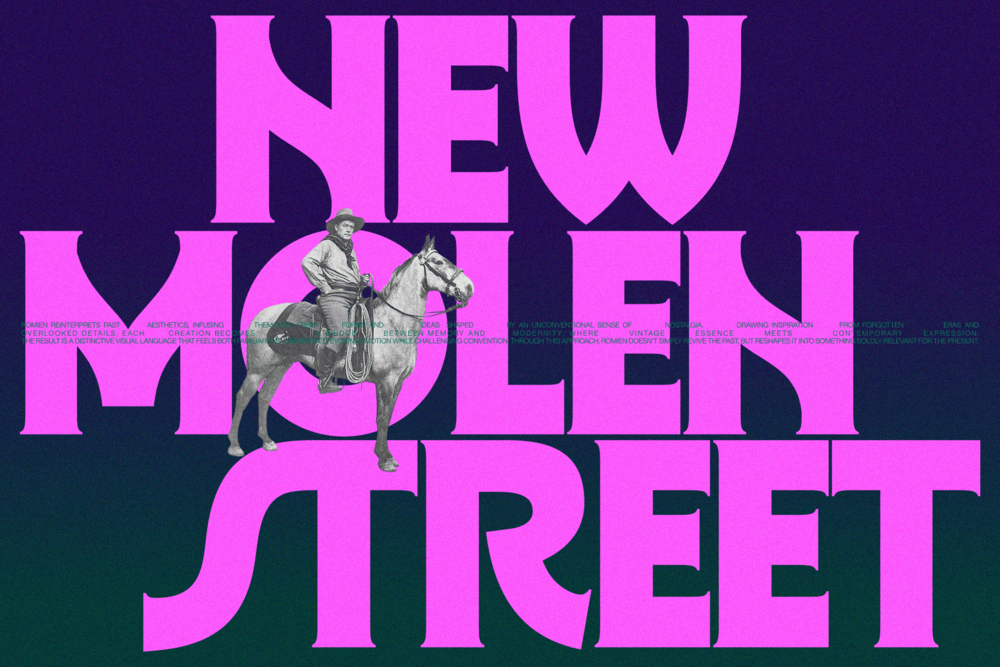
Some fonts have a specific frequency and 403 Pambo is tuned to one very distinct signal: the exaggerated, psychedelic-adjacent lettering of late 60s and early 70s record cover design. The curves are pushed beyond comfortable, the shapes are eccentric in a way that's clearly intentional, and the overall effect is bold without being aggressive, playful without being childish. 403 Pambo is the kind of font that makes you feel like you should be looking at it on gatefold vinyl.
The obvious use case is record store culture: reissue packaging, music venue merch, anything adjacent to that visual world. But the food and beverage space is genuinely interesting territory too. Artisan snack brands, craft sodas, flavoured gin with a maximalist label direction, hot sauces that want to live in pop art territory rather than the rugged outdoors aesthetic. Anywhere the brief gives you permission to go big on personality, 403 Pambo can carry it.
If this kind of expressive retro territory is where you're working, there's more in this direction worth a look.
Matching the Font to the Brief
The reason retro and vintage typography is working so hard in packaging right now isn't that designers are running out of ideas. It's that consumers have developed a well-documented wariness of brands that feel algorithmically assembled, and historical type references carry a kind of credibility that's genuinely hard to manufacture from scratch. A font that references mid-century sign painting or 70s underground print brings a visual backstory that a clean geometric sans simply can't fake.
The key is specificity. Retro is not a monolithic aesthetic: 60s deli warmth reads completely differently to 70s underground print culture, which reads differently again to Victorian-era calligraphic tradition. Pick the era that aligns with your product's actual positioning, not just the one that looks vintage. That's the difference between packaging that feels considered and packaging that just looks old.