

There's a conversation happening in client briefs and studio Slack channels that nobody is documenting properly. It goes something like this: the client wants product visuals for their launch, their social content, their pitch deck. They don't have a photography budget. They never did. And the designer on the job, if they're honest, knows that a good mockup is going to get it done just as well — sometimes better — than a studio shoot that costs more than the entire project fee. This isn't a workaround anymore. It's the workflow.
The economics broke a while back. A proper studio shoot, with a photographer, location or hire, art direction, retouching, and turnaround time, runs into the thousands before you've even briefed the model. For a DTC brand doing ten SKUs and needing seasonal refreshes, that math doesn't work. Larger players figured this out first. H&M, Puma, and Steve Madden have all moved to hybrid workflows where studio photography handles hero moments and campaign imagery, while everything else — product variants, social content, product listings — gets handled digitally. One operator guide from 2026 put it plainly: AI and digital production now own the variants, the repurposing, and the speed. Small brands and independent designers got there earlier and more completely. They just didn't have a press release about it.
What changed the equation wasn't just convenience — it was quality. The best mockups being produced right now include displacement maps that conform artwork to fabric grain and fold. They have environmental lighting that responds to the scene. Fabric rendering that distinguishes between a worn cotton jersey and a crisp polyester blend. These aren't product screenshots on a white background. They're constructed photographs, and in most use cases — poster presentation, apparel, editorial, branded social content — they are genuinely indistinguishable from the real thing at screen resolution. The compromise narrative doesn't hold up anymore. For a lot of formats, mockups are the standard, not the fallback.
What this means for client work is significant. You can present more options, iterate faster, and serve clients who couldn't previously afford visual assets at this quality level. You can show a brand what their identity looks like in the real world — on a venue screen, on a café table, on a poster wall — before a single physical object has been produced. That's a different kind of value. Below are eight products that show exactly how far the format has come, across a range of use cases that goes well beyond the obvious.
Social Posts Pack Vol.01 by züli

Start with the format that gets looked at most. Social Posts Pack Vol.01 is built specifically for Instagram grid work in a streetwear and fashion context, and it doesn't try to be neutral about it. The aesthetic leans into high-contrast collage, bold layout, and the kind of gritty visual language that brands doing streetwear, merch, and urban fashion actually need to communicate on social. Ready-to-edit templates at the right ratios, with the visual identity already baked in. If your client is a label, a merch brand, or a streetwear startup that needs to look like they have a creative director, this is what you hand them. The grunt work of social visual production collapses significantly when the template already has this much personality.
Ashtray Mockup — Café Table by Delamford Supply
The specificity of this one is the point. The Ashtray Mockup — Café Table by Delamford Supply places your design on a branded ashtray in an actual café table setting — a detail that most branding presentations never think to include, and one that immediately communicates to a client how their identity travels into the small, tactile moments of a hospitality environment. Shot at 5152 x 7728 pixels, it holds up at any presentation size. The mood is mid-century, slightly moody, with that neutral and high-contrast quality that makes it sit naturally in a brand identity deck. Café branding, bar concepts, restaurant visual identity — this is the kind of contextual asset that makes a presentation feel like it was thought through to the last detail. No studio required.
RS Poster 06 Mockup by Mockup Flock

Outdoor poster placement is one of the formats where mockups genuinely outperform photography for small operators. To get a real shot of your poster on a textured industrial wall, you need access, timing, and probably a photographer with a ladder. RS Poster 06 by Mockup Flock gives you a weathered, textured surface with earthy industrial tones, the kind of environment that grounds a design and makes it look like it belongs somewhere physical rather than floating in a void. The roughness of the background works particularly well for minimalist design — the contrast between clean artwork and raw surface does a lot of visual work. Good for event campaign proofs, portfolio pieces, and client presentations where you need the work to look placed rather than rendered. If you're chasing more in this territory, there's plenty more poster mockup work worth digging through.
Vintage T-Shirt Mockup by secret-cache

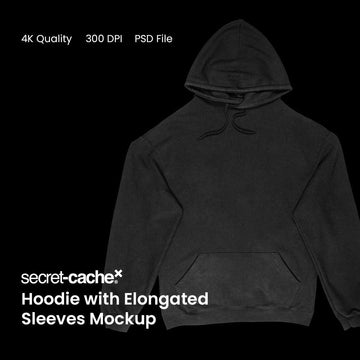
Fabric texture is where apparel mockups have historically fallen apart. You can tell immediately when the render is treating a t-shirt like a flat plane with a texture filter applied — no drape, no weight, no grain variation across the fold. The Vintage T-Shirt Mockup by secret-cache was shot, not rendered, which matters. At 4K with 300 DPI, there's real cotton grain and real garment behaviour in the file. The worn-in quality of the fabric communicates the vintage positioning without any visual trickery — it's just what the shirt looks like. For merch brands working in the nostalgic, washed-out end of the market, this is the one that makes the artwork look like it belongs on the garment rather than printed onto a photograph of one.
T-Shirt Mockup by Pixelbuddha
Where the secret-cache mockup leans into character and age, the Pixelbuddha t-shirt is built for precision and versatility. Clean rendering, smart object workflow, realistic fabric detail that doesn't pull focus from the design. It's the one you reach for when the artwork needs to be the thing people are looking at — structured enough to work for client presentations, portfolio documentation, and merch mockups where the brand identity has to come through clearly. Double-click, drop in, adjust, export. There's no fighting the file. More apparel mockups worth looking at if this is where your work lives.
Spiral Bound Mockup V.01 by Moduclave Studio

Print and editorial presentation is underserved in the mockup market. Most options are either overly generic or styled so heavily they fight the work inside them. Spiral Bound Mockup V.01 by Moduclave Studio sits in a different category. The system is designed around editorial clarity — layout precision, clean material rendering, and a modular structure that includes optional clip and paper elements for composition flexibility. It's the mockup equivalent of a well-built grid: it disappears into the presentation and lets the content take over. For designers working in brand identity, editorial design, or print production who need to show a client what a spiral-bound document actually looks like in the physical world, this does it without adding visual noise.
Modern Magazine Mockup by Blank Studio
Magazine presentation carries a specific kind of weight in brand identity work. A logo on a business card proves very little. The same identity on a magazine cover, shot in a clean studio environment with considered lighting, tells a different story about where the brand belongs. The Modern Magazine Mockup by Blank Studio gets this right. The setting is minimal and contemporary, the rendering is clean, and the overall mood is confident without being overcrowded. It works for brand identity pitches, editorial design portfolios, and any presentation where you need to show a client that their identity has the weight to carry a full-format printed piece. The kind of mockup that earns its place in a Behance case study.
Venue Screen Mockup by Afterimagine

Some of the most useful mockups are the ones that show your work in a space you'd never otherwise have access to. The Venue Screen Mockup by Afterimagine places your design on a large-format screen in a professional venue context — the kind of environment you'd associate with an event, exhibition, or corporate brand moment. For designers working on event branding, digital signage, or large-scale advertising campaigns, this fills a real gap. Clients who can't visualise scale respond immediately to seeing their brand on a screen of this size, in a space that looks real. The rendering is precise and the environment is dark and dramatic in a way that makes digital assets punch hard. This is a presentation tool that closes the gap between concept and conviction.